Caso editoriale mondiale: "Gli antropologi"
Arriva in Italia Ayşegül Savaş. Gli antropologi si è conquistato il titolo di “miglior libro dell’anno” secondo il "New Yorker".
Ultimately, "Scenes from a Marriage" suggests that love isn't a status you achieve; it’s a living, breathing thing that is constantly being renegotiated. It is a collection of moments—some cruel, some tender—that, when stitched together, create a complicated, imperfect masterpiece of human connection.
In these scenes, arguments are rarely about what they seem to be about. The "wrong way" to load the dishwasher is actually an essay on feeling undervalued. A forgotten anniversary is a proxy for the fear of being invisible. Scenes from a Marriage reminds us that conflict is a form of communication—a messy, desperate attempt to be seen by the person who knows us best but might be looking at us the least. The Quiet Endurance Scenes from a Marriage
The title Scenes from a Marriage —famously etched into the cultural consciousness by Ingmar Bergman and later reimagined by Hagai Levi—suggests something far more clinical and fragmented than a simple love story. It implies that a long-term union cannot be captured in a single narrative arc, but only in a series of snapshots: some overexposed by the heat of conflict, others blurred by the quiet hum of domesticity. The Architecture of the Ordinary Ultimately, "Scenes from a Marriage" suggests that love
Are you looking to use this text for a , like a script or an essay, or should we focus on a deeper analysis of the Bergman/HBO series versions? The "wrong way" to load the dishwasher is
Yet, between the explosions, there are the scenes of profound, boring beauty. The way one partner automatically reaches for the other’s hand during a movie, or how they know exactly how the other takes their coffee without asking. These are the scenes that hold the structure together.
Most of a marriage doesn't happen at the altar or in the lawyer's office; it happens in the kitchen at 11:00 PM, over a sink of dishes, or in the heavy silence of a car ride where everything that needs to be said is being intentionally withheld. These "scenes" are defined by a specific kind of shorthand. After years together, a look can be a whole conversation; a sigh can be a declaration of war. The intimacy isn't just in the affection, but in the terrifyingly precise knowledge of how to hurt the other person—and the daily choice not to. The Evolution of the "Self"
A marriage is often the story of two people desperately trying to remain individuals while their lives graft together like two trees sharing the same root system. In the early scenes, there is the performance of the "best self." As the scenes progress, the masks drop. We see the unwashed hair, the petty grievances, and the ugly vulnerabilities. The central tension often isn't "Do I love you?" but "Who have I become because of you?" The Language of Conflict
Arriva in Italia Ayşegül Savaş. Gli antropologi si è conquistato il titolo di “miglior libro dell’anno” secondo il "New Yorker".
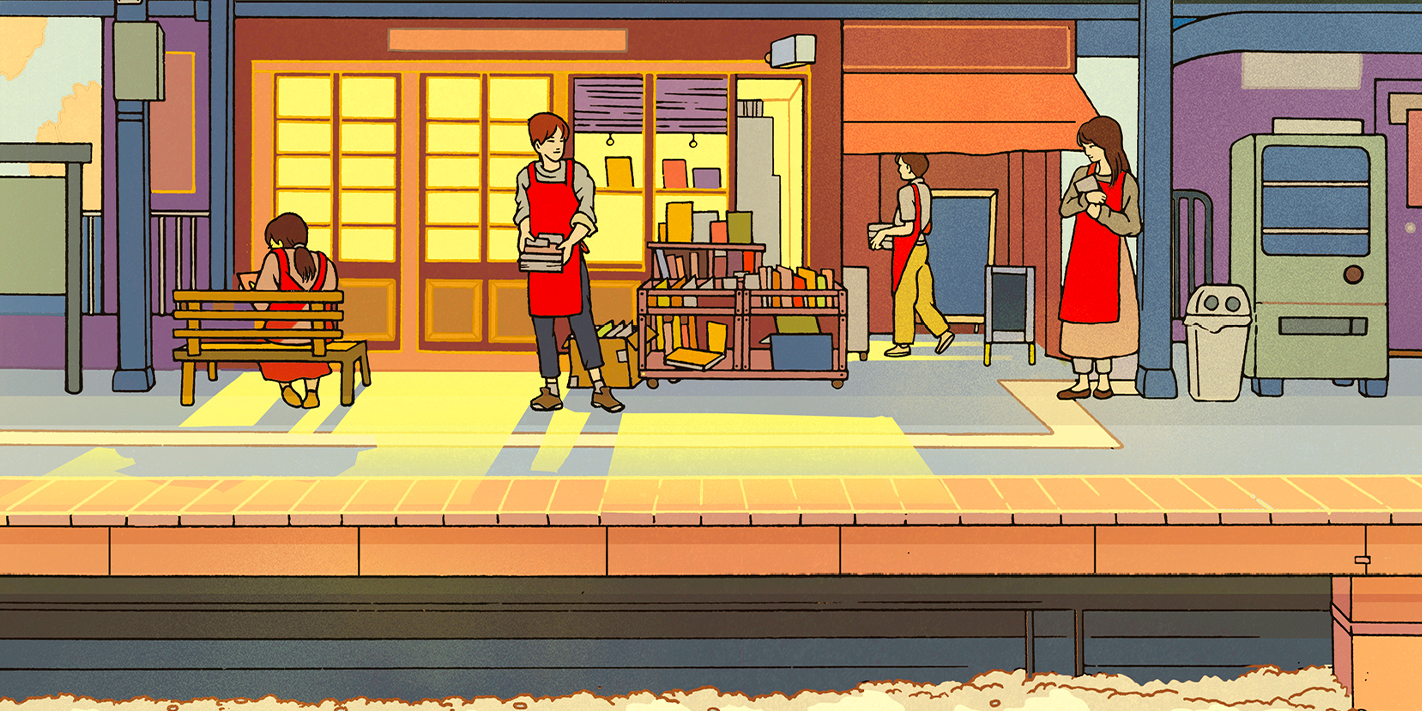
Il fascino delle librerie ekinaka… un rifugio inaspettato per un giovane smarrito e per chiunque stia cercando, senza saperlo, una storia capace di illuminare il proprio cammino.
La pubblicazione di Il buio oltre la siepe di Harper Lee nel 1960 fu un evento memorabile: il romanzo vinse il premio Pulitzer, fu tradotto in quaranta Paesi, vendette quaranta...
I Grammatici, la nuova collana di Gramma, nasce con questa intenzione: pubblicare opere che, nel vasto ambito della letteratura, siano capaci di illuminare un aspetto fondamentale ancora nascosto del...